
Les dégâts d’eau représentent un problème fréquent pour les propriétaires, allant de simples décolorations à des dommages structurels importants. Il peut être difficile de déterminer exactement quand ces dommages sont survenus, car certains signes ne sont pas toujours immédiatement visibles.
Évaluer la situation et établir un échéancier des dommages est essentiel pour éviter qu’ils ne s’aggravent. Même des problèmes mineurs peuvent avoir un impact important sur votre propriété. Dans cet article, nous avons rassemblé des informations utiles pour vous aider à comprendre les causes possibles des dégâts d’eau, les signes à surveiller et comment déterminer s’ils sont récents ou anciens.
Qu’est-ce que les dégâts d’eau?
Les dégâts d’eau surviennent lorsque l’eau s’infiltre dans une propriété et cause des dommages au bâtiment ou à son contenu. Plusieurs facteurs peuvent être en cause, comme des fuites, des inondations, des tuyaux éclatés ou de fortes pluies. Une exposition prolongée à l’eau stagnante peut également causer des dommages. Les dégâts d’eau peuvent affecter différentes surfaces, notamment les murs, les planchers, les plafonds, les meubles et les appareils électroniques.
Identifier les causes des dégâts d’eau
Plusieurs facteurs peuvent être à l’origine des dommages, notamment les fuites, les inondations et l’humidité.
Problèmes de plomberie
Il s’agit souvent de la cause principale. Des tuyaux qui fuient, des conduites d’eau brisées ou des appareils défectueux comme les chauffe-eau, les laveuses et les lave-vaisselle peuvent entraîner des problèmes d’eau. Même une petite fuite peut causer des dommages importants si elle n’est pas traitée, en s’infiltrant dans les murs et les planchers, favorisant la formation de moisissures et compromettant l’intégrité structurelle.
Catastrophes naturelles
Les ouragans, les inondations et les fortes pluies peuvent causer des dommages importants. Les pluies abondantes peuvent entraîner des inondations, tandis que les ondes de tempête associées aux ouragans peuvent endommager les propriétés. Il est important de noter que l’eau d’inondation peut contenir des contaminants dangereux pour la santé.
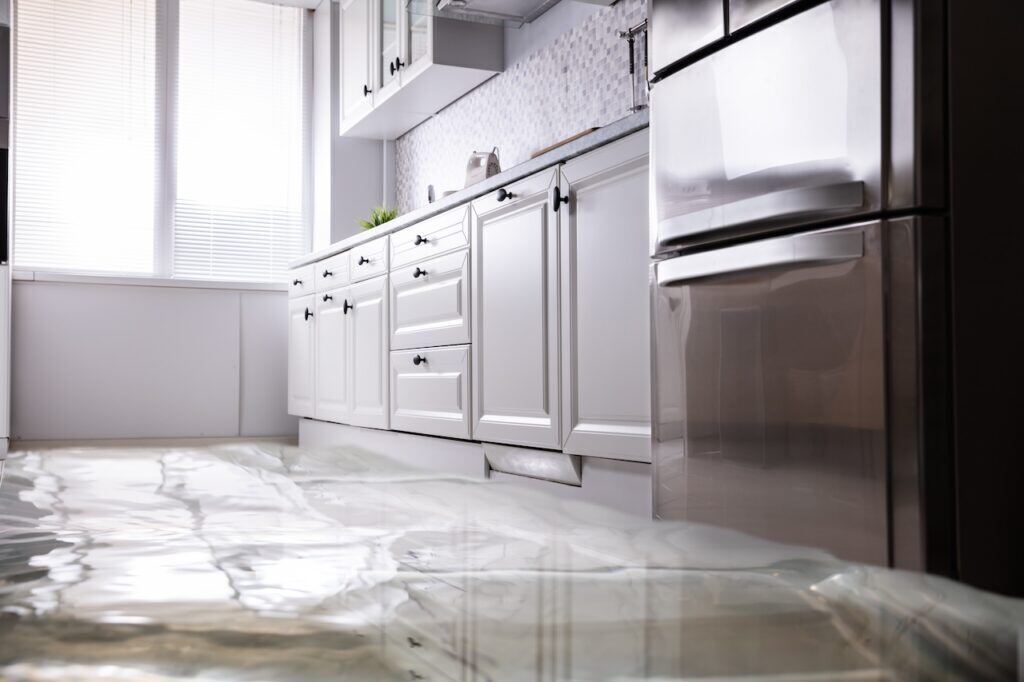
Flooding from severe rainfall and other natural disasters causes significant damage.
Faulty Roofing
Water damage often occurs due to roof leaks. If your roof has any damaged or missing shingles or tiles, or if the flashing around the chimney requires repair, there’s a chance that water can infiltrate into the attic and affect walls, ceilings, and floors.
HVAC Systems
Improper functioning of heating, ventilating, and air conditioning (HVAC) systems, including cooling units and heaters, can also lead to water damage. When a unit’s condensation line gets clogged due to a malfunction, water can flow into the property and cause damage. A leaking or broken heater installed in the attic or basement can pose a significant threat as the water damage directly affects the property’s interior.
Determining Whether Water Damage is New or Old
Identifying the signs of water damage can be challenging, particularly if it has dried. One of the vital steps in addressing water damage is verifying its age. Below are some valuable tips that can help you figure out whether the water damage is new or old.
Analyze Your House’s History and Building Materials
Water damage affects various materials in different ways. For example, thick paint and tiles retain water more efficiently than thin ones, making the latter more susceptible to damage even from small amounts of water. This often appears as peeling paint.
Understanding the materials used in your home is beneficial, as water affects each one differently. If your property features hard materials like tiles or bricks and exhibits signs of water damage, the damage has likely been present for some time.
Check for Water Rings and Water Stains
One of the most telltale signs of water damage is water stains and rings. If you notice a dark spot or stain on your wall or ceiling, there’s a chance it’s fresh water damage. On the other hand, older water damage can develop rings on the surface. The more rings there are, the older the damage. Observing colour changes in the circles can indicate whether the water is wet, dry, or has been there for a long time. Rings are more likely to occur when the water leak is occasional, such as water spots below a roof leak that only gets wet during rain.
Water damage can appear as water stains or rings on your ceiling.
Check for Warping
When excess water seeps into materials, it can cause them to warp, swell, or buckle. To identify whether the water damage is new or old, examine the condition of your wooden floors, walls, or ceilings. If they look distorted, the damage could be old.
On the other hand, if there is no noticeable warping or damage, it could be a recent leak. This visual cue can help you determine the timeline of the damage and make informed decisions about necessary repairs or interventions.
Smell for Musty Odours
There can be a lingering smell when an area suffers from water damage. This smell can be musty. If you notice it, the damage will likely be old. If there is no unpleasant odour, it could indicate that the damage is recent.
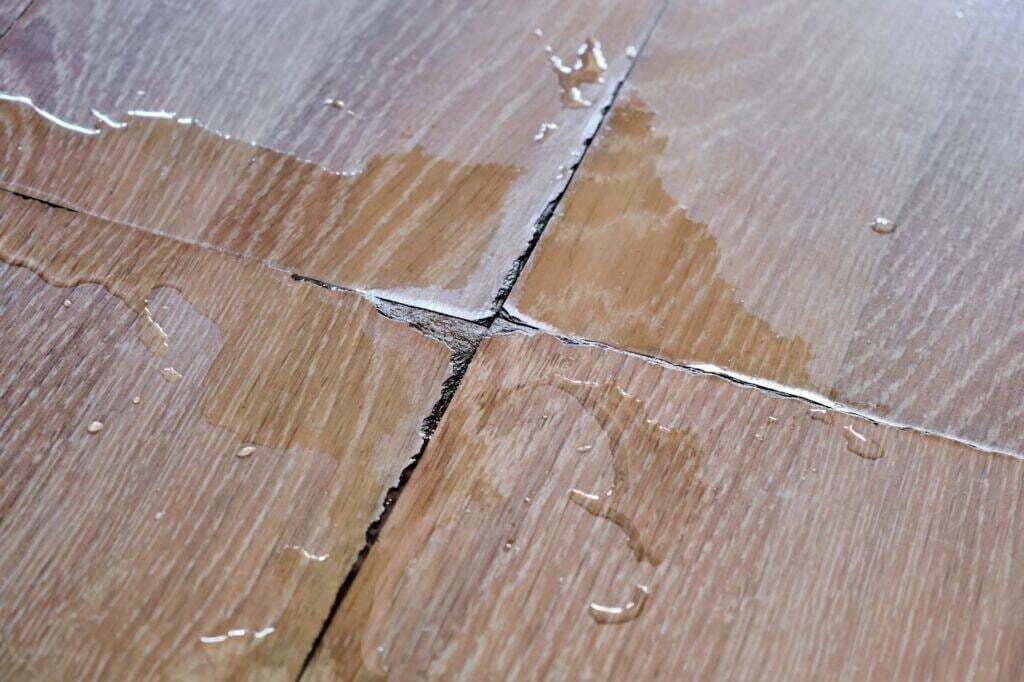
Generally, warped or cracked wood is a sign of a recent water leak.
Search for Watermarks or Decay
Watch for watermarks if you’re trying to determine whether water damage is new or old. Generally, newer water damage will have a visible watermark that is still wet, while older water damage may have a dry and faded watermark. If you notice signs of decay, your property has likely been exposed to water for an extended period. While decay is typically only seen in extreme situations, like flooding, taking action as soon as you notice it is important.
A professional water damage restoration company can help resolve the issue quickly and efficiently due to the property and health risks of water damage.
Contact PuroClean Today for Professional Water Damage Restoration Services
If you find obvious signs of water damage on your property, contact PuroClean today. Our IICRC-certified professionals use advanced equipment and techniques to target all water-affected areas and restore your property to its pre-loss condition quickly and safely. Contact us as soon as possible to learn more about our services. To find your nearest PuroClean office, visit our online office locator or dial (877) 261-7876 today.